



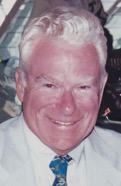
At Columbia, Segel held appointments in the Graduate School of Arts and Sciences, the School of the Arts, the School of International and Public Affairs, and the School of General Studies. He was director of graduate studies in the Department of Slavic Languages (1977-80); member of the Council for Research in the Humanities, Columbia University, (1977-79; chair 1978-79); member of the Columbia University Senate (1978-82); and director, Institute on East Central Europe (1978-88). He was a visiting professor at Indiana University, the University of Pennsylvania, and Stockholm University, Sweden.
Segel was a member of the Board of Trustees of the Kosciuszko Foundation and of the Polish Institute of Arts and Sciences in America, both in New York City. The recipient of numerous fellowships, grants and awards, he was twice decorated in 1975 by the Polish government for contributions on behalf of Polish culture, at the Ministry of Culture in Warsaw and at the Polish Consulate in New York.
Segel published extensively on Polish literature and culture, authoring numerous monographs on Polish drama, Romanticism, Renaissance Culture, and the place of Jews in Polish culture. He also wrote on eighteenth century Russian literature and on twentieth-century Russian drama. An authority on Eastern Europe more broadly, he authored The Columbia Guide to the Literature of Eastern Europe Since 1945, and Egon Erwin Kisch, the Raging Reporter. He was also a prolific comparatist, publishing on Austrian and German culture, Baroque poetry, turn-of-the-century cabaret in cities across Europe, puppets, robots, and automatons in avant-garde drama, and on the physical imperatives of modernism.
Click on the cover for details about the eBook:
